If you’ve ever held a dead smartphone at 2 a.m. mid-commute, or watched a power tool die mid-project when you were only halfway done, you’ve probably cursed lithium-ion batteries. As a lithium battery supplier, I get it—my team and I talk about battery lifespans all day, every day, and we still field the same question a dozen times a week: “How long do these things actually last?” The truth is, there’s no one-size-fits-all answer. A lithium battery’s lifespan depends on more than just the chemistry printed on the label, and understanding that is the difference between buying a battery that lasts 6 months and one that works reliably for a decade. Let’s break it down, from real-world use cases to the science we build into every cell we ship. Lithium Battery

First, let’s get clear on two terms that get thrown around and mixed up all the time: cycle life and calendar life. This is the foundation of any honest conversation about lithium battery longevity, and I see suppliers (and even some manufacturers) muddying these waters to make their products sound better than they are. Cycle life is how many full charge-and-discharge cycles a battery can go through before it drops below 80% of its original capacity. That 80% threshold is important—lithium batteries don’t suddenly go from 100% to 0% dead; their performance degrades gradually, and most devices stop working well once they fall below that 80% mark. Calendar life, on the other hand, is how long a battery will last from the day it’s manufactured, regardless of whether you ever use it. Leave a new laptop battery in a drawer for three years? That’s calendar life at work, even if you never cycled it once.
Now, cycle life is where the science really gets interesting, and where chemistry makes all the difference. The most common lithium batteries we supply are lithium iron phosphate (LFP) and nickel-manganese-cobalt (NMC) cells. LFP has been blowing up in popularity for electric vehicles, solar storage, and heavy-duty power tools over the last few years, and for good reason: its cycle life is typically 2,000 to 5,000 cycles, and sometimes even more for high-grade automotive cells. Compare that to NMC, which usually clocks in at 1,000 to 3,000 cycles, and you can see why LFP is our go-to for applications that need to last. But that’s not a hard number—those cycles aren’t measured in a lab sitting at a perfect 25°C (77°F), fully charged and discharged every single time. In the real world, that number drops fast if you’re using the battery harshly.
Take an electric bicycle, for example. If you’re someone who charges your e-bike every time you get home, only letting the battery drain to 10% before plugging it in again, and stores it on your porch in the middle of Arizona summer where it hits 45°C (113°F) in July, you might get 1,500 cycles out of that same LFP cell that would hit 4,000 cycles in a lab. Why? Lithium batteries degrade from a few main culprits, and most of them are avoidable, but only if you understand what causes them. The first is lithium plating, which happens when you charge a battery too fast, especially in cold temperatures. When you charge a battery at 0°C or lower, the lithium ions don’t have enough energy to insert themselves into the anode (usually graphite) properly—instead, they form a metallic layer on the surface, which builds up over time, blocks ions, and reduces capacity. That’s why you’ll notice your phone or laptop battery charges slower in the cold, and if you’ve ever left your car in a snowy parking lot and charged it right away, you’re speeding up degradation without even realizing it.
The second big culprit is solid electrolyte interphase (SEI) growth. Every lithium battery has a thin, stable SEI layer that forms on the anode during the first few charges—it’s supposed to be a protective barrier that keeps the electrolyte from reacting with the anode further. But over time, as you charge and discharge, heat, and even just age, that SEI layer breaks down and re-forms, thickening over time. That thickening eats up active lithium ions that could be used to power your device, so your capacity drops. The higher the temperature, the faster this happens. Store a battery at full charge in a hot garage? You’re not just using it up fast—you’re making the SEI layer grow faster. Store it at 40% charge, in a cool (10°C to 20°C / 50°F to 68°F) dry place, and you can cut calendar degradation by half, according to the testing we do in our in-house lab.
That brings me back to calendar life. Most low-quality lithium batteries have a calendar life of 2 to 3 years, even if you only use them once a month. Our premium LFP cells have a calendar life of up to 10 years, and that’s not a marketing line—it’s based on real testing we’ve done on batteries we manufactured in 2013 that are still at 85% capacity today, with regular, mild use. NMC cells usually have a calendar life of 5 to 7 years, so that’s something to keep in mind when you’re comparing products. But again, that number is affected by how you store and use the battery. I’ve seen batteries last 12 years in solar storage systems where they’re kept in a shaded, temperature-controlled room, charged to 60% in the summer and 50% in the winter, and only cycled 100 times a year. I’ve also seen batteries die in 18 months on a construction site where they’re left in a truck bed in 100°F heat, charged to 100% every night, and used 10 times a day for heavy jackhammers. It’s not just the battery—it’s the environment and the usage pattern.
Let’s talk about specific applications, because that’s what most of our customers care about. If you’re a small business owner running a fleet of electric delivery vans, you’re going to care about cycle life over 5 years of daily use. Our medium-duty LFP batteries for delivery vans average 3,500 cycles, which translates to roughly 10 years of use if each van drives 100 miles a day—most of our customers report their vans still have 80% capacity after 8 years, which is way longer than the average van lifespan these days. For residential solar storage, batteries are usually cycled once a day to store energy for the night, so a 5,000-cycle LFP battery would last over 13 years before needing replacement, which is perfect because solar panels themselves last 25 years or more. Even for power tools, which get used hard and often: our LFP-powered cordless drills and saws are rated for 2,000 cycles, and professional contractors tell us they get 5 to 7 years of daily use out of a single battery before it’s time for a replacement.
But here’s the thing that most people don’t tell you: there’s a difference between “end of life” and “can it still work.” A battery that drops to 75% capacity isn’t dead—it’s just not as powerful as it was. You can still use it for lighter applications, like powering a garden shed light or a small fan, after it’s no longer suitable for a high-demand power tool or an electric car. We actually offer a take-back program for old lithium batteries, and we’ve had customers bring in 10-year-old LFP cells that still work perfectly as solar backup for a holiday cabin, even though they were retired from their original use. That’s the circular economy at work, and it’s why we design our batteries to be repairable and recyclable, not just disposable.
I know what some of you are thinking: with all these variables, how do I know what’s right for my business or my home? That’s why our team doesn’t just sell batteries—we work with customers to assess their specific use case, environment, and budget. Are you running a food truck that needs a battery to power a fridge all day? We’ll recommend a LFP battery that can handle deep discharges and heavy loads. Are you a homeowner installing a small solar system for your backyard shed? We’ll help you pick a compact, cost-effective LFP battery that fits your space. We don’t push the most expensive battery just for the sake of a sale—we push the one that will last you as long as you need it, with minimal degradation.
But even the best battery will degrade eventually, and that’s not a failure—that’s just how lithium chemistry works. Over the last 10 years, I’ve seen the lithium battery industry go from a space where a “long-lasting” battery was 2 years of life to a point where we’re now selling batteries that last a decade or more, thanks to better chemistry, better manufacturing processes, and a better understanding of how degradation works. The biggest mistake people make is treating all lithium batteries the same, regardless of what they’re used for. A cheap NMC battery from a big-box store might sound like a good deal, but if it’s going to last 2 years instead of 10, it’s actually more expensive in the long run.
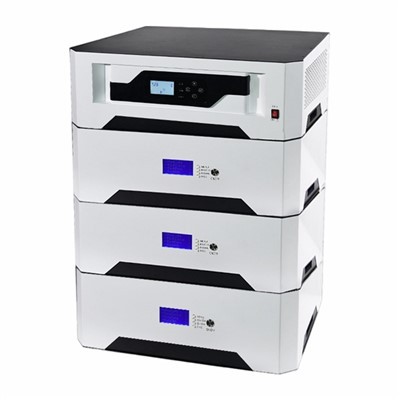
If you’re tired of dealing with batteries that die too fast, or you’re looking for a reliable partner to supply lithium batteries for your fleet, solar project, or commercial application, our team is here to help. We build our batteries with quality materials, rigorous testing, and an eye towards long-term performance, so you don’t have to replace your batteries every few years. Whether you need a small batch for a startup or a bulk order for a large project, we can work with you to find the right solution for your needs.
References
- Tesla Energy. (2022). Lithium-Ion Battery Lifecycle and Degradation. Retrieved from technical whitepaper on electric vehicle and energy storage systems.
- Lindbergh, G., et al. (2019). Calendar and Cycle Life of Lithium-Ion Batteries: A Review. Journal of Power Sources, 435, 226758.
- International Energy Agency. (2021). Lithium Batteries for Stationary Energy Storage: Market Trends and Performance. IEA Publishing.
- NREL. (2020). Battery Storage Lifetime Analysis for Residential Solar+Systems. National Renewable Energy Laboratory Technical Report.
Nmc Pouch Cell To discuss your lithium battery needs and get a customized quote, reach out to our team today.
Dongguan Ritano New Energy Co., Ltd.
With abundant experience, we are one of the most reliable lithium battery manufacturers and suppliers in China. We warmly welcome you to wholesale customized lithium battery made in China here from our factory. If you have any enquiry about quotation, please feel free to email us.
Address: Building 27, Jewelry Park, Huanchang North Road, Changping Town, Dongguan City, Guangdong Province
E-mail: Umi.sales@ritano.cn
WebSite: https://www.ritanopower.com/
