Is it easy to operate a Wall & Roof Roll Forming Machine?
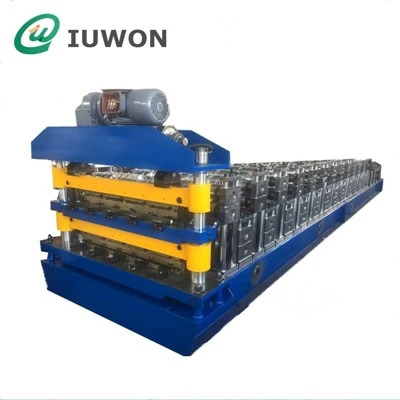
As a supplier of wall and roof roll forming machines, I often encounter potential customers who have concerns about the operation of these machines. They wonder if they require a high level of technical expertise or if they can be easily integrated into their existing production processes. In this blog post, I’ll delve into the factors that influence the ease of operating a wall and roof roll forming machine and provide insights to help you make an informed decision. Wall & Roof Roll Forming Machine

Understanding the Basics of Roll Forming Technology
Before assessing the ease of operation, it’s essential to have a basic understanding of how roll forming machines work. Roll forming is a continuous bending process in which a long strip of metal, typically steel or aluminum, is passed through a series of consecutive rolls. Each set of rolls gradually shapes the metal into the desired cross – sectional profile. For wall and roof applications, this process can create various profiles, such as corrugated sheets, standing seam panels, and trapezoidal sheets.
The core principle of roll forming is relatively straightforward, and modern machines are designed to simplify this process even further. However, the actual ease of operation can vary depending on several key factors.
Machine Design and Automation
One of the most significant factors influencing the ease of operation is the design of the machine itself. Over the years, roll forming machine technology has advanced considerably, with a focus on improving user – friendliness.
Modular Design
Many of the wall and roof roll forming machines we supply feature a modular design. This means that different parts of the machine, such as the roll stands, shear, and control system, can be easily assembled, disassembled, and adjusted. Modular design allows for quick and easy maintenance, as well as the ability to replace individual components when necessary. For operators, this means less downtime and a more straightforward process when it comes to making adjustments to the machine.
Automation Features
Automation has become a standard feature in modern roll forming machines. Our machines are equipped with advanced control systems that can automatically adjust the speed, length, and profile of the formed sheets. Programmable logic controllers (PLCs) are commonly used to store multiple production programs, allowing operators to switch between different profiles with just a few button presses.
For example, if a production run requires a specific length and profile of roof panels, the operator can simply select the appropriate program from the PLC. The machine will then automatically set the speeds of the rolls, the length of the cut, and other parameters. This reduces the need for manual adjustments and minimizes the potential for human error.
Operator Training and Support
While modern machines are designed to be user – friendly, proper operator training is still crucial for efficient and safe operation.
Comprehensive Training Programs
As a supplier, we offer comprehensive training programs for our customers. These programs cover everything from the basic principles of roll forming to the specific operation of our machines. Our experienced technicians provide hands – on training at the customer’s facility, ensuring that operators are familiar with the machine’s controls, maintenance procedures, and safety features.
During the training, operators learn how to load the metal coils, adjust the roll stands, set the cutting lengths, and troubleshoot common issues. We also provide detailed training manuals and video tutorials that operators can refer to even after the initial training session.
Technical Support
In addition to training, we offer ongoing technical support to our customers. Our support team is available 24/7 to answer any questions or address any issues that may arise during the operation of the machine. Whether it’s a minor technical glitch or a more complex problem, our technicians can provide remote assistance or, if necessary, visit the customer’s site to resolve the issue.
Material Handling and Safety
Another aspect of operating a wall and roof roll forming machine is material handling and safety.
Material Loading and Unloading
The process of loading metal coils onto the machine and unloading the formed sheets can be a potential challenge. However, modern machines are designed with features to simplify these tasks. For instance, our machines are equipped with self – centering coil reels that can easily handle various coil sizes. The reels are adjustable, allowing for quick and easy coil loading.
On the output side, the formed sheets are systematically stacked or conveyed to the next stage of the production process. Some machines are even equipped with automatic stacking systems, which further reduce the manual labor required.
Safety Features
Safety is a top priority in the operation of roll forming machines. Our machines are equipped with a range of safety features, such as emergency stop buttons, safety guards, and interlocks. These features ensure that the machine stops immediately in case of an emergency or if a safety guard is opened during operation.
Training also plays a crucial role in safety. Operators are taught how to use the safety features correctly and are made aware of the potential hazards associated with the machine. This helps to create a safe working environment and reduces the risk of accidents.
Potential Challenges
While operating a wall and roof roll forming machine can be relatively easy, there are still some potential challenges that operators may face.
Profile Changes
Changing the profile of the formed sheets can be a more time – consuming process. Although modern machines with programmable controls can simplify this to some extent, there may still be a need to physically change the roll stands to accommodate different profiles. This requires careful adjustment and alignment to ensure that the new profile is formed accurately.
Material Variability
The quality and characteristics of the input metal can vary, which may affect the operation of the machine. For example, differences in the thickness, hardness, or surface finish of the metal can lead to variations in the formed profile. Operators need to be aware of these factors and make appropriate adjustments to the machine settings to ensure consistent quality.
Conclusion
In conclusion, operating a wall and roof roll forming machine can be relatively easy, especially when using modern, well – designed machines. Key factors such as machine design, automation, operator training, and safety features contribute to the overall ease of operation. However, potential challenges such as profile changes and material variability need to be taken into account.
As a supplier, we are committed to providing our customers with high – quality, user – friendly machines and comprehensive support. Our goal is to make the process of operating these machines as seamless as possible for our customers.
Wall & Roof Roll Forming Machine If you are considering purchasing a wall and roof roll forming machine for your production needs, we would be delighted to have a discussion with you. Our team can provide you with detailed information about our machines, offer customized solutions, and help you with the entire process from installation to after – sales service. Feel free to reach out to us to start the conversation and explore how our roll forming machines can enhance your production capabilities.
References
- "Roll Forming Technology Handbook", published by the Roll Forming Association
- Industry – specific technical literature on metal forming processes
- Internal documentation on the design and operation of our wall and roof roll forming machines
Hanghzou IUWON Technology Co., Ltd.
Hanghzou IUWON Technology Co., Ltd. is one of the most professional wall & roof roll forming machine manufacturers and suppliers in China. Please feel free to buy high quality wall & roof roll forming machine made in China here from our factory. For price consultation, contact us.
Address: No.755, Xintangtou Village, Xinjie Street, Xiaoshan District, Hangzhou, Zhejiang
E-mail: sales@iuwon.com
WebSite: https://www.iuwonforming.com/
