If you’ve ever stood in a factory at 2 a.m., watching a robotic arm seal a crate before it rolls onto a shipping line, or seen a residential irrigation system spring to life right on schedule, you’ve watched a solenoid valve do its job. As someone who’s supplied mechanical parts to factories, farm operations, and even aerospace teams for over a decade, I’ve spent countless hours talking to engineers who treat solenoid valves like little workhorses—easy to take for granted, but impossible to replace. Today, I want to pull back the curtain on how these tiny but critical parts actually work, because understanding that isn’t just for engineering textbooks; it’s the difference between picking a part that lasts 6 months and one that lasts 5 years. Mechanical Parts
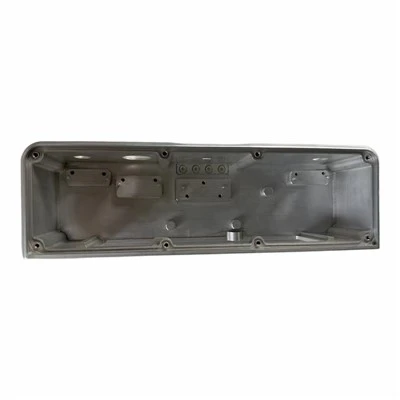
Let’s start with the basics, because “solenoid valve” sounds like fancy jargon, but it’s just two core components working in tandem: a solenoid and a valve body. The solenoid is the electrical muscle of the part—it’s a coil of tightly wound wire, usually copper, wrapped around a hollow metal core (that core is called the armature). When you run electrical current through that coil, it creates a magnetic field—this is electromagnetism, the same principle that makes your fridge magnet stick, but on a smaller, more controllable scale. The valve body is the mechanical part that does the actual opening and closing. It’s made of durable materials like brass, stainless steel, or PVC, depending on what it’s moving—water, oil, gas, or even harsh chemicals. Inside the valve body, there’s a disc, plunger, or diaphragm that blocks or unblocks the flow path, and that plunger is directly connected to the armature of the solenoid.
That’s the core, but there are a few key parts I see engineers overlook all the time. First, springs. Most solenoid valves have a return spring sitting on the opposite side of the plunger from the armature. That spring’s job is critical: when the electrical current cuts off, it pushes the plunger back to its original position, resetting the valve. Without that spring, the valve would get stuck open or closed, and that’s a quick ticket to downtime. Then there’s the seal—usually a rubber or plastic gasket, often EPDM or Viton, depending on the fluid. If that seal is the wrong material for the job, it will crack, swell, or wear out in weeks, not years. I’ve seen this happen more times than I can count: a farmer buys a cheap solenoid for their irrigation line, uses it with hard water, and the seal corrodes in 3 months, instead of the 2–3 years it should last. The difference? Choosing a valve with a seal rated for the specific fluid and pressure it’s handling.
Now, how does this all work in practice? Let’s break it down step by step, using the most common type of solenoid valve: the direct-acting valve, which is perfect for small flows and low pressure. When you send a low-voltage electrical signal (usually 12V, 24V, or 120V, depending on your system) to the solenoid coil, the magnetic field it generates pulls the armature toward the coil. Since the plunger is attached to the armature, that pulls the plunger up (or to the side, depending on design) and opens a small orifice in the valve body. Fluid or gas can flow through the valve right away, no extra pressure needed—this is why direct-acting valves are great for small, low-pressure applications, like controlling a spray nozzle in a factory or a gas pilot light.
But direct-acting valves have a limit: they can’t handle high pressure or large flow rates. That’s where pilot-operated solenoid valves come in, the workhorse I supply most often for industrial and agricultural use. Here, the solenoid doesn’t directly pull the main plunger that controls the flow. Instead, it controls a small pilot orifice, a tiny channel leading to the backside of the main diaphragm or plunger. Let me explain that: when current activates the solenoid, the pilot orifice opens, which releases pressure from the backside of the main diaphragm. The main diaphragm has higher pressure on the inlet side of the valve, so that pressure pushes the diaphragm up, opening the main flow path for the entire valve. When the current cuts off, the solenoid closes the pilot orifice, and a small spring or a tiny bleed hole re-pressurizes the backside of the diaphragm. That higher pressure pushes the diaphragm back down, closing the valve.
Pilot-operated valves are the workhorses because they can handle much higher pressure (up to thousands of PSI, depending on the model) and much larger flow rates, because the solenoid only has to move a tiny pilot plunger, not the full main diaphragm. The tradeoff? They need a minimum inlet pressure to work—usually 10 to 15 PSI, though some low-differential pilot valves can go lower. I always make a point to ask customers about their system pressure before recommending a solenoid, because putting a pilot valve in a low-pressure system will leave it leaking or stuck closed. It’s a small detail, but it’s the kind of thing that saves companies thousands in downtime.
Another common type is the latching solenoid valve, which is perfect for battery-powered systems where energy efficiency matters most. Instead of keeping current running through the coil to hold the valve open or closed, a latching valve uses a permanent magnet in the armature. A short pulse of current pulls the armature one way to open the valve, and another short pulse of opposite polarity pulls it back to close it. That means no continuous power draw—ideal for remote irrigation valves, roadside traffic control systems, or any application where you don’t want to run power to the valve 24/7. I’ve supplied these to a solar-powered irrigation operation in Arizona, where they’d be impossible to run with standard solenoids because of the constant power drain.
Now, let’s talk about what actually makes a solenoid valve fail, because that’s what keeps me in business as a supplier. I see three main failure modes, and they’re almost all preventable with the right part selection. First, seal degradation. As I mentioned earlier, using the wrong seal material is the top culprit. If you’re moving hot water, EPDM might work, but if you’re moving gasoline or hydraulic fluid, you need Viton, which is resistant to chemicals and high temperatures. If you use EPDM for gasoline, it will swell and crack in months, and suddenly your fuel line is leaking. Second, coil burnout. That’s almost always caused by voltage mismatches—using a 120V solenoid on a 240V system will burn out the coil in seconds, while using a 240V solenoid on 120V will leave it weak and unable to open. Third, debris buildup. Even in closed systems, tiny particles of rust, scale, or pipe sediment can get into the valve and jam the plunger or diaphragm. That’s why most good solenoid valves need a strainer upstream, a detail I always mention when I quote a part—installing a $20 strainer will save you from a $5,000 factory shutdown.
As a mechanical parts supplier, my job isn’t just to send someone a box with a solenoid valve inside. It’s to understand their application, because no two uses are the same. A solenoid valve for a food and beverage plant (which has to be food-grade, with no leaching materials) is nothing like a solenoid for a mining operation (which has to withstand dust, vibration, and harsh temperatures). A valve for a medical device has to be ultra-precise, with no air leaks, while a valve for a residential sprinkler system just needs to last 5 years and be easy to replace. I’ve built relationships with customers over 10, 15 years because I don’t just sell parts—I help them pick the right part for their job. Last year, a customer who’d been buying cheap solenoids for their packaging line came to me after 3 years of constant downtime. We swapped them for stainless steel pilot-operated valves rated for their hydraulic oil, added strainers, and they haven’t had a valve failure since. That’s the kind of win that matters more than any sale.
If you’re an engineer, a facility manager, or a small business owner who needs solenoid valves for your operation, you don’t have to guess which part to use. Whether you need a direct-acting valve for low-pressure spray nozzles, a pilot-operated valve for high-flow industrial lines, a latching valve for battery-powered remote systems, or a food-grade valve for food and beverage processing, I can help you source parts that last, that fit your system, and that save you money on downtime and replacements.

If you’re looking to replace faulty solenoid valves, upgrade your existing system to reduce downtime, or source parts for a new project, I’d love to talk. Get in touch to discuss your requirements, and I can recommend the right mechanical parts for your application, tailored to your pressure, fluid, and environment needs.
Auto Parts References:
- "Solenoid Valves: Principle of Operation and Selection Guide." Fluid Power Journal, 2022.
- "Mechanical Components for Industrial Automation." Machinery Handbook, 31st Edition, Industrial Press, 2021.
- "Fluid Control Systems: Design, Selection, and Installation." CRC Press, 2020.
- "Electromechanical Valves for Agricultural Applications." Irrigation Association Technical Report, 2023.
- "Materials for Valve Seals: Compatibility and Performance." Journal of Materials Engineering and Performance, Vol. 30, No. 4, 2021.
Dongguan Yixin Metal Products Co., Ltd.
With abundant experience, we are one of the most professional mechanical parts manufacturers and suppliers in China. Please rest assured to wholesale advanced mechanical parts made in China here from our factory. Good service and quality products are available.
Address: No.172, Daxing Road, Yangwu, Zhen, Dongguan City, Guangdong Province, China
E-mail: Chengxingfeng123@163.com
WebSite: https://www.zgdgyixin.com/
