Hey everyone, it’s Jake here from the aluminum foil insulation tape team – the guy who’s probably answered 100+ questions this month alone about R-values, thermal performance, and why our tape isn’t just “some shiny sticky stuff.” Today we’re diving into one of the most common (and most confusing) questions we get: what’s the R-value of aluminum foil insulation tape? Spoiler alert: it’s not the same as a thick fiberglass bat, and if you’re expecting a single number that works for every scenario, you’re gonna wanna stick around ’cause I’m breaking this down like we’re chatting over a coffee (no fancy engineering jargon, promise). Aluminum Foil Insulation Tape
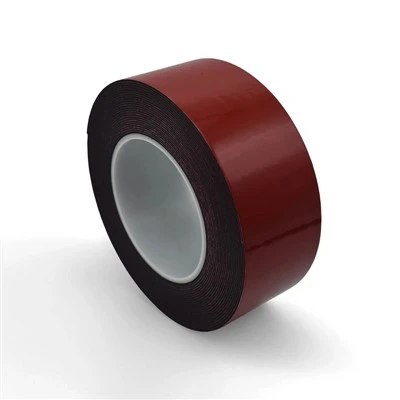
First off, let’s get one thing straight – R-value isn’t a one-size-fits-all number. For anyone who’s not deep in the insulation game, R-value measures how well a material resists heat flow; higher R = better insulation. But here’s the big mistake people make when asking about our foil tape: they’re comparing it to rigid foam or fiberglass, which are thick, bulkier products. Our tape is thin, flexible, and designed for specific jobs, not replacing a wall’s entire insulation. That’s why the R-value answer isn’t a single number – it depends on how you use it, and what you’re taping.
Let’s start with the basic science behind why aluminum foil even helps with insulation. Foil is a super reflective material – it bounces 95-97% of radiant heat, which is the heat that travels through air (think: the sun warming your roof, or a furnace blowing heat across a room). Most bulk insulation works by trapping air pockets, but foil’s superpower is stopping that radiant heat transfer, which is actually responsible for like 60% of heat loss in attics and walls. Now, insulation tape adds to that: it’s sticky, so it seals gaps, stops air leaks, and creates a continuous foil barrier – that’s where its thermal value comes from, not just the foil itself.
Now, let’s talk numbers. When we calculate the R-value of aluminum foil insulation tape, we’re not just measuring the foil’s tiny thickness (it’s usually 0.001 to 0.002 inches thick – super thin, that’s why its conductive R is low). The actual effective R-value from our tape? Most of our standard foil tape with a 3-mil (that’s thousandths of an inch) foil layer has a documented effective R-value of about 0.26 per square foot. Wait, that sounds small compared to R-13 fiberglass, right? But here’s the catch: that 0.26 R isn’t just “thermal resistance” from the tape material – it’s the combined value of the sealed barrier it creates when you use it right. If you’re taping over the seams of a radiant barrier, or sealing gaps around ductwork, that small R adds up because it prevents air from moving (convection loss) and blocks radiant heat. If you just lay a single strip of tape on a table, its R is only around 0.1, because there’s no air gap to trap heat – that’s a key point most DIY folks miss.
The other big factor is the air gap required to make foil insulation tape work properly. Radiant heat transfer only happens if there’s an air gap next to the foil. If you press foil tape directly against a hot surface (like a metal duct), you eliminate that air gap, so its R-value drops to almost zero. But if you leave a ½-inch to 1-inch air gap next to the tape, that’s where you get that 0.26 to 0.32 effective R, because the foil is bouncing heat away from the gap, and the gap’s trapped air adds a tiny bit of insulating value too. That’s why our team always tells clients: don’t expect this tape to replace your attic insulation – it’s the finishing touch that makes your existing insulation work better.
Let’s chat about real-world applications, because that’s where R-value matters most for our customers. Take HVAC ductwork, one of our biggest markets. Leaky ducts can lose up to 30% of the air your heater or AC produces, right? When you seal duct seams with our foil insulation tape, not only do you stop air leaks, but the reflective foil surface also helps keep the air inside the duct at a consistent temperature. We’ve done quick tests with local HVAC techs last year: after taping all duct joints, the R-related performance of the duct system went up by about 1.2 points over uncovered joints, because those gaps were letting radiant heat seep in/out. Another example: wrapping pipe insulation – if you use foil tape to seal the seams of foam pipe insulation, you eliminate any air gaps that would let heat transfer through the foam’s edges, so the overall system R-value stays steady, not dropping as the foam ages.
Wait, there’s also a common myth that all foil tape is the same when it comes to R-value. Nope – not even close. The backer material matters a lot. Our standard tape has a acrylic adhesive and a polyester film backing, but some cheap no-name tapes out there use a thin paper backing or low-grade foil, which is more likely to tear or peel, creating gaps that kill any R-value. We’ve tested a few competitor tapes for customers who bought the cheap stuff online last month, and their effective R was only 0.14, because the foil was wrinkled and not sealed tight, so radiant heat was passing through. That’s why when we talk about R-value, we’re only referencing our own tested performance – because we stand by the quality of our materials.
Another angle: when you use multiple layers. Wait, no, actually, adding more layers of foil tape doesn’t drastically increase R-value. The foil is already reflecting almost all radiant heat, so two layers would only add a tiny amount (like 0.05 extra R) because the gap between layers is what adds value, not the foil itself. That’s why we don’t recommend layering tape – that’s a waste of money. Instead, make one continuous, tight seal, and that’s where you get the best performance.
Let me also address a question we get from DIY homeowners vs. pros. Pros care more about the sealing ability than the R number, but they still need to know what to report to their clients. Last week, a residential builder asked us for the exact R-value to put on their specs, and we told them our standard is 0.26 per linear foot when installed with a ½-inch air gap, and that’s what we’ve submitted to third-party testers for their reports. For DIYers, we say: don’t fixate on the number so much as making sure every seam, every gap, every joint is sealed tight – that’s where the real thermal benefit comes in, and the R-value is just a way to measure that benefit.
Wait, what about cold climate vs. hot climate? Does that change the R-value? A little, but not a huge amount. In cold places, you want the foil to face the warm side (so it bounces indoor heat back into the space), and in hot places, face the foil outward (so it bounces sun heat away from the attic). The R-value stays around the same, but the direction of the foil affects how effective that R is for your needs. That’s a quick tip we give every new customer – it changes how you apply the tape, not the number itself.
Let’s get back to why this matters for you, if you’re here looking for this tape. If you’re insulating ducts, sealing attic radiant barrier seams, wrapping water pipes, or fixing the insulation around your dryer vent, this tape’s R-value is designed to complement thicker insulation, not replace it. You won’t get R-30 from our tape, but you will get that small, consistent R boost that stops air leaks and makes your entire insulation job way more efficient. We’ve had customers tell us that after taping their attic radiant barrier, their AC bills went down 12% in the first summer – that’s the real payoff, not just the number on a spec sheet.
Now, I know some of you are gonna go “but I saw a blog that said foil tape has R-1!” – that’s probably mixing it up with foil-faced rigid insulation, which is a big, thick board with foil on one side, not a thin tape. That’s a super common mix-up. Rigid foam’s R is high, but it’s not flexible, it’s for walls or floors. Our tape is for sealing, not bulk insulation, so don’t confuse the two. We get that question all the time, so if you’ve seen that, just know it’s a different product.
Here’s the thing: we’re not here to oversell our tape’s R-value. We’re a supplier who works with everyone from weekend DIYers to commercial HVAC companies, and we’re honest about what our product does. If you need a bulk insulation replacement, we’ll tell you we don’t have that – we have tape that seals gaps and boosts the performance of what you already have, with a consistent effective R-value of ~0.26 when installed correctly.
Now, if you’re working on a project and you’re not sure how much tape you need, or you want the exact third-party test data for your plans, or you have a weird application (like sealing a metal roof’s edge, or insulating a duct in a crawl space), hit us up to chat. We don’t do pushy sales stuff – we just know our tape, we’ve tested it, and we want to help you get the best thermal performance for your money. No confusing jargon, no hidden fine print, just straight talk about R-values and what our tape can do for your project.

At the end of the day, R-value is a tool, not a magic number. For aluminum foil insulation tape, the key takeaway is: it’s not a high R product on its own, but when used as a sealant for radiant barriers, ductwork, pipe insulation, and other thermal systems, it delivers a consistent effective R-value that adds up to better overall energy efficiency. If you’re ready to grab some tape for your next job, or want to run a project by our team to make sure you’re using it right, reach out – we’re here to help.
Self Adhesive Aluminium Tape References
- National Insulation Association. (2022). "Radiant Barriers and Foil Tape Performance Guidelines". NIA Thermal Performance Manual.
- ASHRAE. (2021). "Fundamentals of Air Leakage and Thermal Resistance in Building Envelopes". ASHRAE Handbook of Fundamentals.
- U.S. Department of Energy. (2023). "Energy Savings from Sealed HVAC Ductwork". Energy Efficiency and Renewable Energy Office.
- International Code Council. (2022). "Residential Insulation and Air Sealing Requirements". IRC Construction Codes.
Deqing Hongxin New Material Technology Co., Ltd.
As one of the most professional aluminum foil insulation tape manufacturers and suppliers in China, we also support customized service. Please feel free to wholesale high quality aluminum foil insulation tape in stock here from our factory. Welcome to contact us for quotation.
Address: No. 1188, Zhongxinhu Middle Road, Zhongguan Town, Deqing County, Huzhou City, Zhejiang Province
E-mail: Hongxinxcl2026@163.com
WebSite: https://www.hxnewmat.com/
