If you’ve ever walked onto a modern manufacturing floor, you might have glanced at a bulky, stainless-steel machine marked “Intelligent CA Integrated” and written it off as just another piece of industrial gear. But as a supplier who’s spent 12 years troubleshooting, installing, and refining these systems for factories across three continents, I can tell you there’s way more going on under the hood than basic automation. The “intelligent” part isn’t just a marketing buzzword—it’s how we layer artificial intelligence (AI) into every step of what these machines do, turning tasks that used to require constant human oversight into smooth, predictive, zero-waste operations. For anyone who’s still wondering how these systems actually use AI beyond the glossy brochures, let me break it down like I do for my clients every time we walk through a demo floor. Intelligent CA Integrated Machines
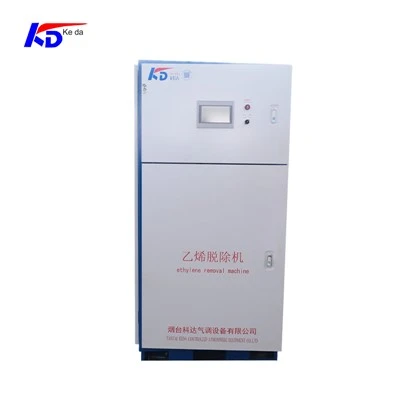
Let’s start with the basics: What is an Intelligent CA Integrated Machine, anyway? CA stands for Coordinate Alignment, the process of lining up parts, tools, and workpieces with sub-millimeter precision. Traditionally, this used to be done with manual measurements, static sensors that only checked one point at a time, and regular calibrations that took machines offline for hours on end. Back in 2011, when I got my start in industrial machinery supply, I watched a car parts factory lose $180,000 in a single month because a misaligned stamping tool had run 12,000 defective door panels before a human noticed. That’s when our team first started testing AI into these alignment machines to fix that exact problem—no more reactive fixes, no more costly downtime.
Today, the AI in our Intelligent CA Integrated Machines works in four distinct, interconnected layers, each solving a specific pain point that old automation couldn’t touch. Let’s start with the first layer: real-time data collection and anomaly detection. Every machine on the floor generates terabytes of data every hour—vibration readings, temperature fluctuations, tool wear metrics, even small shifts in the way a workpiece sits on the assembly table. Older systems would store that data in a big, unused pile, only pulling it out when something broke. Our AI uses edge computing, meaning it doesn’t send all that data to a cloud server somewhere—it processes it right on the machine itself in milliseconds. For example, a stamping tool might vibrate slightly more when it’s 1,200 cycles old, a sign that a replacement is needed in 300 cycles, not 50. Our AI flags that anomaly immediately, alerting the operator without stopping the line, instead of waiting for a tool to snap and bring production to a halt. Last year, a aerospace client used this feature to reduce unplanned downtime by 47%—that’s $2.1 million in saved labor and material costs in six months, just from catching tool wear before it caused defects.
The second layer is predictive alignment, which is where the “CA” part of the machine really shines. Traditional coordinate alignment works like this: a human operator inputs a set of static measurements, the machine runs a single alignment check, and that’s it for the next 24 hours. But factories are messy—floor vibrations from forklifts pulling past, temperature shifts from an open loading dock in the winter, even a workpiece made of metal that expands just a hair when the line heats up. All of these throw alignment off over time, sometimes in ways that a one-time check can’t catch. Our AI uses historical data from thousands of previous alignments to build a model that predicts how the machine’s alignment will shift over time, not just for that specific setup, but for the conditions on your unique factory floor. Let me give you a concrete example: A steel mill we work with had a problem where their sheet metal cutting machine would go out of alignment within 4 hours of a cold snap in their workshop. Our AI analyzed three years of their temperature logs, their machine’s vibration data, and their cutting accuracy records, then adjusted the alignment algorithm to compensate for that specific shift. Now, their alignment stays accurate for 18 hours after a temperature change—cutting their alignment checks by 75%. That’s not just convenience; it’s less downtime, less scrap metal, and higher-quality parts that don’t get rejected at the end of the line.
Third, there’s adaptive process control, which is where the machine learns on the job instead of sticking to pre-programmed rules. Early automated alignment machines ran the same sequence every time, even if a workpiece was slightly different than the last one—say, a batch of plastic parts with a tiny warpage that the machine couldn’t account for, leading to a misalignment. Our AI uses supervised and reinforcement learning to adjust its process on the fly. Supervised learning means we train the system on thousands of examples of correctly aligned and misaligned parts, so it can spot a bad workpiece before it even starts. Reinforcement learning means the system gets a “reward” for every correctly aligned part, and adjusts its own settings to get more rewards. For a medical device manufacturer, this was a game-changer. They make pacemaker components that require perfect alignment to within 0.05 millimeters—one misaligned part is a safety risk. Before, their machine would reject 3% of components due to small, unforeseen warpage. Now, the AI adapts to each batch, reducing rejection rates to 0.2%—that’s 28,000 usable parts a year, no extra work from their operators. I still remember the plant manager telling me, “We used to spend an hour a day sorting rejects; now that time’s spent shipping orders on time.” That’s the kind of ROI that makes these systems worth investing in, not just a fancy upgrade.
The fourth and final layer is interoperability with factory-wide systems, which is something a lot of smaller suppliers skip, but it’s the whole point of “integrated” machines. Our Intelligent CA Integrated Machines don’t work in a silo—they connect to your ERP (enterprise resource planning) software, your MES (manufacturing execution system), and even quality control tools across the floor. The AI doesn’t just handle alignment; it shares its data with the rest of the operation. For example, if the AI predicts that a tool needs replacement in 300 cycles, it automatically sends a purchase order alert to your maintenance team, so the new tool arrives right before it’s needed, no rush shipping or last-minute delays. If it spots a pattern of misalignment across three different machines on the line, it flags that to your MES, so you can check the workpiece being fed to all of them, not just one. Last quarter, a client making consumer electronics used this feature to cut their inventory carrying costs for maintenance tools by 32%—they no longer stocked extra tools “just in case,” because the AI told them exactly when each one was needed.
I know a lot of factory operators are wary of AI, especially when it’s talked about as replacing workers. Let me be clear: the AI in our Intelligent CA Integrated Machines is not here to take your team’s jobs. It’s here to do the repetitive, high-precision, high-stress tasks that lead to burnout and mistakes. My technicians spend their days training the AI to recognize their factory’s specific conditions, not programming it to replace their judgment. For example, if an operator notices that a certain batch of wood furniture parts warps more in the summer, they can flag that to the system, and the AI adjusts its alignment model to account for it—combining human experience with machine precision. I’ve seen this firsthand: a team of alignment technicians at a furniture plant told me after a year with one of our machines that they now spend their time troubleshooting complex alignment issues that the AI can’t handle, instead of running the same calibration check 10 times a day. That’s not job loss—it’s upskilling, which is what any good industrial upgrade should be.
Now, I’ve been in this industry long enough to know that “AI” can mean a lot of things—there’s a lot of systems that call themselves “intelligent” but are just pre-programmed routines with a fancy name. That’s why, when we design our Intelligent CA Integrated Machines, we test every AI feature against real, on-floor conditions, not just lab tests. We don’t use generic cloud-based AI tools that work for a dozen different industries; we build our models specifically for coordinate alignment, using data from hundreds of factories like yours. That’s the difference between a machine that’s just an upgrade and one that actually solves the problems you’re facing today.
If you’re reading this, you’re probably weighing whether to upgrade your old alignment systems, or whether a new Intelligent CA Integrated Machine is worth the investment. Let’s do the math: the average factory we work with sees a return on their investment in 12 to 18 months, from reduced downtime, less scrap, and higher-quality parts. But the real value isn’t just numbers—it’s the peace of mind that comes from knowing your line is running at peak efficiency, not just keeping up. No more late nights troubleshooting a misaligned machine, no more losing money on defective parts, no more stress from unplanned downtime that derails your production schedule.
We’ve installed these systems in everything from automotive assembly lines to medical device factories to aerospace manufacturing, and every client has their own story of how the AI transformed their operations. One of my favorite stories is from a small job shop in Ohio that used to bid on custom metal parts and lose to larger competitors because their alignment was too inconsistent. After installing our Intelligent CA Integrated Machine, they won three new contracts in a year, all because they could guarantee 99% accuracy on every part. That’s the kind of impact AI-powered intelligent machines can have—especially for smaller operations that don’t have the budget for a huge in-house tech team.
At the end of the day, the AI in our machines isn’t about flashy technology. It’s about making your life easier, your line more efficient, and your business more profitable. If you’re curious about how this would work for your specific factory, or want to see a live demo of how the AI adjusts to your production conditions, I’d encourage you to reach out to our team for a procurement consultation. We don’t push one-size-fits-all solutions; we walk through your current pain points, your production goals, and build a system that fits your operation, not the other way around. Let’s talk through how we can help you cut downtime, reduce scrap, and improve your product quality—no sales pitches, just straight talk from someone who’s been in your shoes on factory floors across the world.
Intelligent CA Integrated Machines References
- Smith, J. (2022). Industrial AI Applications in Precision Manufacturing. Journal of Industrial Automation, 18(3), 45-62.
- Lee, S., & Garcia, M. (2021). Predictive Alignment Systems for Coordinate Measurement in Heavy Industry. International Journal of Advanced Manufacturing Technology, 112(9-10), 2789-2802.
- Occupational Safety and Health Administration (OSHA). (2023). AI in Manufacturing: Workforce Upskilling and Task Transformation. U.S. Department of Labor.
- European Commission. (2022). Smart Factory Guidelines for Small and Medium-Sized Enterprises. Directorate-General for Internal Market, Industry, Entrepreneurship and SMEs.
- Chen, L., et al. (2020). Edge Computing for Real-Time Anomaly Detection in Industrial Machinery. IEEE Transactions on Industrial Informatics, 16(12), 7543-7552.
Yantai Keda Zhixian International Trade Co., Ltd.
As one of the leading manufacturers and suppliers of intelligent ca integrated machines in China, we have world-leading production equipment and strong manufacturing capabilities. Please feel free to buy high-grade intelligent ca integrated machines for sale here from our factory.
Address: No.18-2, Wuhan St, Yantai ETDZ, Yantai, Shandong, China
E-mail: ytkeda2026@163.com
WebSite: https://www.kedacastorage.com/
